

Temple Economics
A devotion to the reclamation of the Mother principle in money.
By BLISS School
It’s time to write a new story of money, one that supports life.
Scarcity, competition, avoidance, greed. These are the distortions of the story we inherited. A story that harms us individually and collectively. And that story is ending.
In many traditions, when the archetype of the Great Mother went dormant in our civilisation, - the force of generosity, sufficiency, nourishment - she reappeared in the shadows as greed and scarcity.
The absence of the Mother became the hunger of the world.
Temple Economics is devoted to the remembrance of a different story around money. In circle, we gather to rediscover a map of money through the mythical and the archetypal, a map that restores what has been forgotten.
Money’s original purpose was simple: to let abundance circulate.
Money is currency, a current. It is meant to move, to flow, to nourish.
The abundance of the earth put into motion.
Temple Economics is for those who care about the bigger picture, about civilisation and the systems that shape it.
You can feel that humanity stands at a threshold between stories: the old story of extraction and separation is ending, and something new is asking to be born.
You know that money and economics sit at the heart of this transformation, and you feel called to reimagine the systems that hold them.
You want to integrate money into your purpose, to make it an expression of your soul.
“It was an old story that was no longer true… Truth can go out of stories, you know. What was true becomes meaningless, even a lie, because the truth has gone into another story. The water of the spring rises in another place.”
Ursula K. Le Guin
Why Temple Economics?
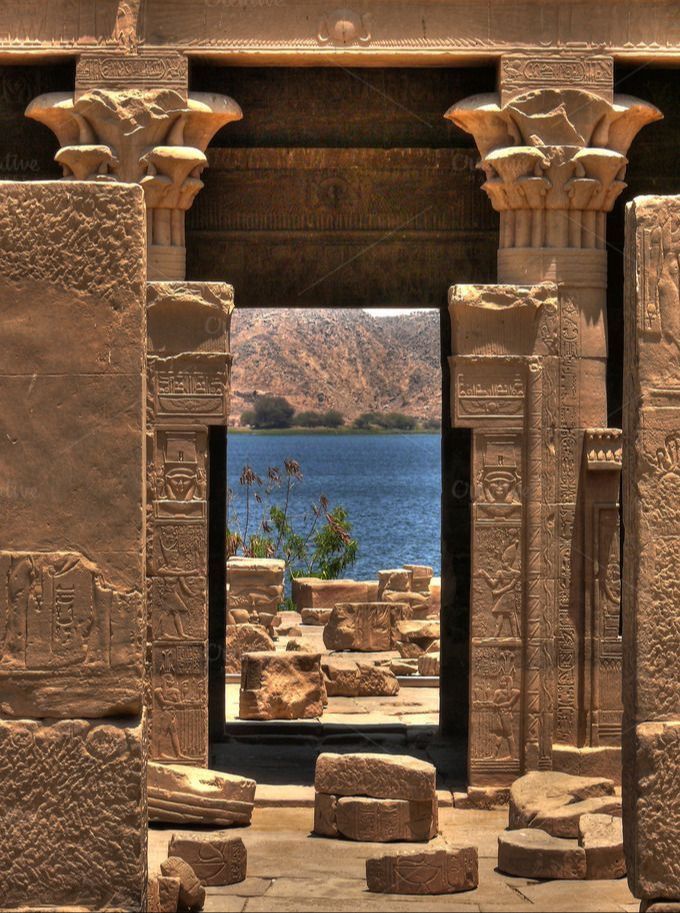
In the earliest civilisations, temples were among the earliest economic institutions.
In ancient Mesopotamia, Egypt, and across the ancient Near East, temples were not merely places of worship. They were centres of redistribution, storage, accounting, and care.
Grain was stored in temple granaries during times of abundance and released during famine. The earliest systems of accounting, weights and measures, and written records emerged from temple economies. Not to accumulate wealth, but to ensure balance, continuity, and collective survival.
These early economies were relational, not extractive. Wealth circulated through ritual, seasonal cycles, and communal responsibility. Money and resources were understood as part of a living system entrusted to human stewardship, not private hoarding.
Temple Economics remembers this origin.
Not as a return to the past, but as a reminder that economics was once rooted in care, sufficiency, and service to life before it became abstracted and severed from the body of the Earth.
In reclaiming Temple Economics, we are not rejecting modern systems — we are asking a deeper question:
What would a modern day economy look like if it once again served life?
Temple Economics Pillars
Rooted in the feminine
The current economic story is built on masculine-coded principles: perpetual growth, individual accumulation, competition, linearity, scarcity.
A feminine-rooted map restores the qualities of abundance that we know deep in our bodies: cyclicality instead of endless expansion, interdependence as part of a wider whole, generativity instead of extraction.
Myths as maps
Money is a story, and to rewrite it, we return to its archetypal roots. We explore the distorted patterns we carry (the Martyr, the Prostitute, the Hoarder) and the integrated ones that hold true power (the High Priestess, the Great Mother, the Creator)
Archetypal work gives us a clearer language for understanding which parts of us are interacting with money, and how to shift toward a relationship rooted in real power.

Tools for real life
Through circles and immersions, we will learn practical tools and capacities to move through the world of money. It gives us a map: how we earn, how we spend, how we save and invest, and how we hold resources in a way that reflects our deeper principles - even within an economy that does not yet align with them.
Temple Economics Events
Temple Economics Circle
Upcoming Circle:
April 5th: Details TBC
Future dates
May 3rd
June 14th
Each month, we will open a new layer of exploration, exploring archetypes, myths, and shadow patterns that shape how we create, lead, and receive.
We will inquire into how our spiritual values can infuse the practical, how to build structures that honour energy, integrity, and grace.
As we experiment with the energetics of giving and receiving and explore new ways of moving currency, each session is hosted on a donation basis - with the intention of sharing a gift from the heart.
Sign up below and receive your monthly invite to Temple Economics.

The Money Map
21-27th April 2026 - Aswan, Egypt
Join us on the island of Auset, Isis, to remember the deeper story of money before the distortions of our time, a story of money that supports life. We return to its source in myth, ancient Egyptian wisdom, the feminine archetypes, and the land itself.
Explore how to hold more wealth - both for yourself and for the purpose you’re here to serve.
Learn More